
Let’s talk about cable internet. You know the one—the kind that comes through the same coaxial cable as your TV. It’s fast, reliable (most of the time), and it’s what a lot of us use to stream our favorite shows, work from home, and generally live our digital lives. But there’s a concept at the heart of how it all works that many people don’t fully understand, and it has a huge impact on your internet speed: shared bandwidth.
Think of your internet connection like a highway. You’re trying to get to your destination, which is the website you want to visit. When the highway is empty, you can cruise along at top speed. But what happens during rush hour? The highway gets crowded, traffic slows down, and everyone has to share the available lanes. This is a pretty good analogy for how shared bandwidth works with cable internet.
Your internet service provider (ISP) has a big pipe, a main line, that brings internet traffic to your neighborhood. From there, it splits off into smaller and smaller connections, eventually reaching your home. The thing is, you’re not the only one connected to that neighborhood segment. All your neighbors are, too. This means that you’re all sharing the same total amount of bandwidth. The “bandwidth” is the capacity of that pipe, the number of “lanes” on our highway.
So, when everyone in your neighborhood is online at the same time—say, on a Friday night when people are streaming movies, playing online games, and downloading big files—that shared pipe starts to get a little crowded. This is why you might notice your internet slowing down during peak hours. It’s not a problem with your modem, or your router, or even necessarily your ISP’s main network. It’s a localized traffic jam on your neighborhood’s shared segment.
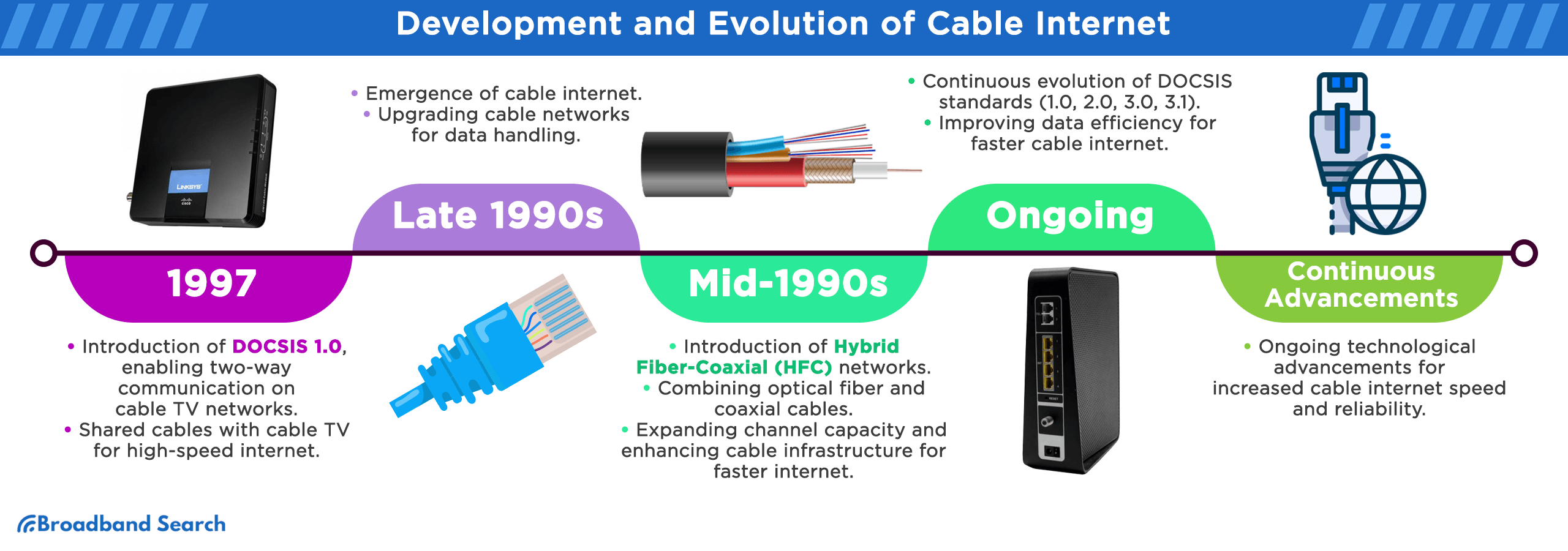
Now, this isn’t necessarily a bad thing. Shared bandwidth is what makes cable internet affordable. Your ISP doesn’t have to run a dedicated, private line to every single home. That would be incredibly expensive and impractical. By sharing the available bandwidth among a group of users, they can offer a high-speed connection at a much more reasonable price. It’s a system of give and take. Most of the time, the shared capacity is more than enough for everyone. But there are those moments when demand spikes, and you feel the effects.
Let’s dive a little deeper into the technical side, without getting too bogged down in jargon. Your cable internet connection uses something called a DOCSIS (Data Over Cable Service Interface Specification) modem. This modem is the bridge between your home network and the shared cable line. It communicates with a device at the other end of the line, located at your ISP’s headend, which is called a Cable Modem Termination System (CMTS). The CMTS is the central hub for your neighborhood segment. All the data from your home and your neighbors’ homes has to go through that CMTS.
The CMTS is a powerful piece of equipment, but it has a finite capacity. It can handle a certain amount of data at any given time. The total amount of data that can flow to and from the CMTS is the shared bandwidth for that neighborhood segment. The more users who are active at the same time, the more the available bandwidth gets divided up.
This is why, when you see an advertisement for a cable internet plan that promises “up to” a certain speed, they mean it. That “up to” is a crucial phrase. It’s the maximum speed you can achieve under ideal conditions—i.e., when no one else in your neighborhood is using much bandwidth. On a lazy Tuesday afternoon, you might hit that advertised speed. But on a busy Friday evening, you’re likely to see a lower number. Your connection speed is dynamically allocated. The faster you and your neighbors are using the internet, the smaller your slice of the bandwidth pie becomes.
Now, you might be thinking, “What about fiber optic internet? Is that also shared?” In many cases, no. Fiber optic internet, particularly for residential use, often involves a dedicated line to your home. This is a major difference and a key reason why fiber is often seen as the superior technology. With fiber, that high-speed connection is yours alone. There are no neighbors sharing the same segment of the main pipe. It’s like having your own private highway. This is why fiber internet speeds are much more consistent and aren’t subject to the same peak-hour slowdowns as cable internet.
So, what can you do about shared bandwidth issues? For starters, it’s a good idea to run a speed test at different times of the day. This will give you a better sense of when your neighborhood’s internet usage peaks. If you consistently see slow speeds during peak hours, it might be worth talking to your ISP. They might be able to tell you if the problem is a known issue in your area. Sometimes, the solution is for the ISP to “split the node,” which means they divide a large neighborhood segment into two smaller ones, effectively reducing the number of people sharing the same bandwidth. This is an expensive and time-consuming process, but it’s a way for them to improve service in a congested area.
Another thing to consider is your plan. If you’re on a very basic plan and you’re a heavy internet user, you might be contributing to the problem while also being more sensitive to it. A higher-tier plan might offer you a larger slice of that shared bandwidth, even if the overall pipe is still congested. It’s not a guaranteed fix, but it can help.
In conclusion, shared bandwidth is a fundamental aspect of cable internet. It’s a trade-off that allows for high-speed internet at an affordable price. While it can lead to slowdowns during peak usage times, it’s a system that works for the vast majority of users most of the time. Understanding how it works can help you better manage your expectations and even troubleshoot some of your own internet speed issues. So the next time your Netflix show starts buffering on a Friday night, you can blame your neighbors (in a friendly way, of course) for all being online at the same time.


